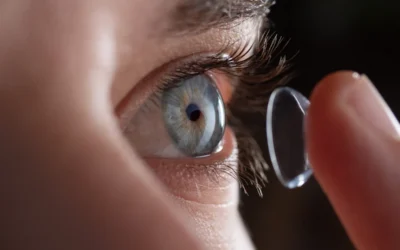
LASIK and contact lenses can both provide clear vision without relying on everyday eyeglasses. The better fit depends on more than your prescription. Your eye health, comfort with contacts, daily routine, and long-term vision goals all play a role.
If you are happy with contacts, there may be no reason to change. But if lens care, dryness, or the cost of replacement lenses feels like a constant frustration, a LASIK consultation can help you understand whether refractive surgery is worth exploring.
When contact lenses may be the better choice
Contact lenses offer flexibility without the commitment of surgery. They can be a practical option for people who want clear vision for sports, special events, or daily wear but still prefer the ability to take their lenses out at night.
Contacts may make sense if you:
- Have a prescription that changes from year to year
- Are not a candidate for laser vision correction
- Prefer a non-surgical option
- Want to switch easily between contacts and glasses
- Need vision correction that can change with different activities
Today’s lenses come in a range of replacement schedules and materials, but a comfortable fit still matters. During a contact lens exam, your eye doctor evaluates factors such as corneal curvature, lens size, and tear film quality to help determine which lenses fit and perform well on your eyes.
Contacts do require consistent care. Depending on the lens type, that can include cleaning, storing, replacing lenses on schedule, and keeping follow-up appointments. For some wearers, those steps feel routine. For others, they become a reason to consider LASIK.
When LASIK may fit your goals
LASIK is a type of refractive surgery that reshapes the cornea to correct nearsightedness, farsightedness, or astigmatism. Many people consider it because they want greater freedom from contact lenses and glasses for activities such as exercising, traveling, swimming, or waking up and seeing clearly.
You may want to explore LASIK if you:
- Wear contacts or glasses most days
- Find contacts uncomfortable or inconvenient
- Have a stable prescription
- Want to reduce your dependence on corrective eyewear
- Understand that surgery has potential risks and may not eliminate the need for glasses in every situation
LASIK is not right for everyone. Dry eye, corneal thickness and shape, certain eye conditions, and prescription stability can all affect candidacy. Age matters, too. LASIK does not prevent presbyopia, the normal age-related change that makes close-up tasks harder over time. Even after successful surgery, some adults eventually need reading glasses.
What will an eye doctor consider?
The decision is not simply “LASIK versus contacts.” Your eye doctor will look at the health and shape of your corneas, your current prescription, and whether your vision has remained stable. They will also consider dry eye symptoms, your overall eye health, and the visual demands of your work, hobbies, driving, and sports.
A comprehensive eye exam can clarify whether laser vision correction is a reasonable option or whether updated contacts better suit your needs. If refractive surgery is appropriate, the team can refer you to a qualified ophthalmologist and provide post-operative care as you heal.
Choose the option that supports your everyday life
Contacts and LASIK each offer meaningful advantages. Contacts may provide the flexibility you want without surgery, while LASIK may be a worthwhile option for reducing daily dependence on lenses and glasses.
Schedule an eye exam to discuss your vision goals, evaluate your options, and choose the approach that fits your eyes and your lifestyle.